

Divergent PA6 and PA66 price trends & root causes |
|
| Irma Zhang | |
| Insight | Time: Nov 27 2026 3:11PM | |
Key takeaways
- PA6 reacts faster to feedstock swings via shorter cost pass-through; downside is largely priced in, and prices are stabilizing.
- PA66 uses dual feedstocks (adipic acid & HMDA) and mostly contract pricing, so its price declines lag PA6 by 7-10 days.
- Maintenance at Eversun and Lunan's delayed restart tighten CPL supply, supporting PA6 costs.
- Weak automotive, engineering-plastics and tire demand keeps weighing on PA66, driving concentrated late-November price falls.
- PA6 should trade in narrow ranges; PA66 may face near-term pressure from soft downstream demand.
Overview
Recently, PA6 and PA66 chips have shown persistent divergence in price performance. In early November, PA6 chips dropped rapidly in tandem with raw materials, while PA66 chips delayed their downturn by roughly one week. Into late November, the decline of PA6 moderated and prices gradually stabilized, yet PA66 prices kept falling sharply.
This divergence is mainly driven by differences in raw material pass-through efficiency, contract pricing mechanisms, downstream demand mix and the timing of bearish factor unwinding.
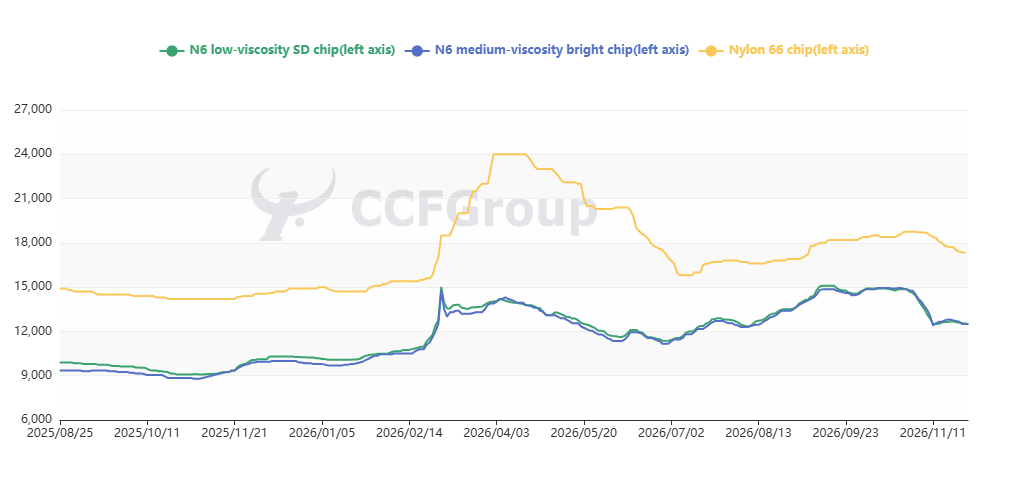
At the start of November, benzene plunged and pulled CPL prices steadily lower. PA6 chips followed suit immediately with almost no time lag. The PA6 value chain is relatively short; cost transmission from benzene to CPL and onwards to chips works smoothly with fast inventory turnover, making the product highly responsive to price shifts. Meanwhile, the downstream of PA6 chips is dominated by spinning mills. Against a backdrop of persistently soft demand, weaving mills react sensitively to cost changes. Once the market priced in weaker raw materials, some sellers offered discounts proactively amid bearish sentiment, which accelerated the price decline.
| Price trends of nylon 6 and nylon 66 chips (yuan/mt) | |||
| Date | PA6 SD low-RV chip | PA6 bright medium-RV chip | PA66 GP-grade chip |
| 2-Nov | 14600 | 14750 | 18750 |
| 6-Nov | 13500 | 13700 | 18700 |
| 11-Nov | 12400 | 12500 | 18400 |
| 18-Nov | 12640 | 12800 | 17750 |
| 24-Nov | 12600 | 12650 | 17400 |
| Price change rates of nylon 6 and nylon 66 chips | |||
| Date | PA6 SD low-RV chip | PA6 bright medium-RV chip | PA66 GP-grade chip |
| Nov 2-6 | -7.50% | -7.10% | -0.30% |
| Nov 6-11 | -8.10% | -8.80% | -1.60% |
| Nov 11-18 | 1.90% | 2.40% | -3.50% |
| Nov 18-24 | -0.30% | -1.20% | -2.00% |
PA66 displayed clear lagging behavior. PA66 chips rely on a dual feedstock route of adipic acid and HMDA. Although lower benzene would eventually feed through to adipic acid, adipic acid and HMDA have a high share of contract volumes and longer pricing cycles, so costs could not decline at the same pace. Earlier high benzene prices once pushed adipic acid into negative processing spreads. Faced with losses, adipic acid producers held firm on offers for a period. For instance, Hualu and Yangmei restricted supply via unit maintenance to support prices. Chip producers also had strong incentive to defend prices, as they carried high-cost raw material inventories and bulk long-term contracts had not yet matured. In addition, PA66 demand is concentrated in modified engineering plastics, automotive and industrial filament markets, where long-dated fixed-price orders prevail. As a result, PA66 chips only started falling after high-priced orders were fulfilled and supply pressure built up, around 7-10 days later than PA6.
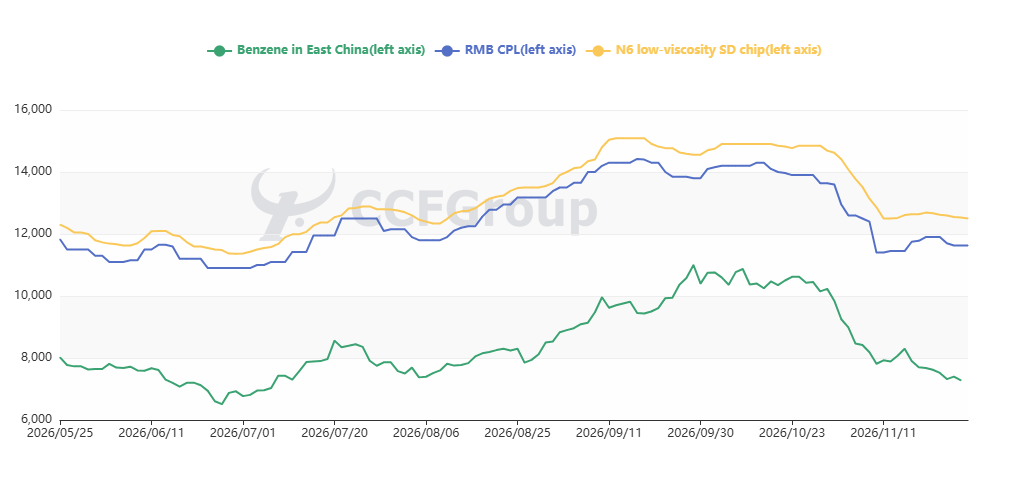
The market split again in late November: PA6's losses narrowed and flattened out, while PA66 remained under heavy downward pressure.
Most bearish factors for PA6 had been largely priced in after the preceding sharp correction. Benzene's downtrend slowed and CPL had limited further downside, removing strong downward momentum on the cost side. Pressured by production losses, Eversun shut for maintenance and Lunan delayed its unit restart, tightening overall supply and offering fundamental support. Since mid-November, CPL edged higher after a period of sideways trading at low levels. Chip prices tracked this shift, moving from a one-way decline into low-range consolidation with limited room for further falls.
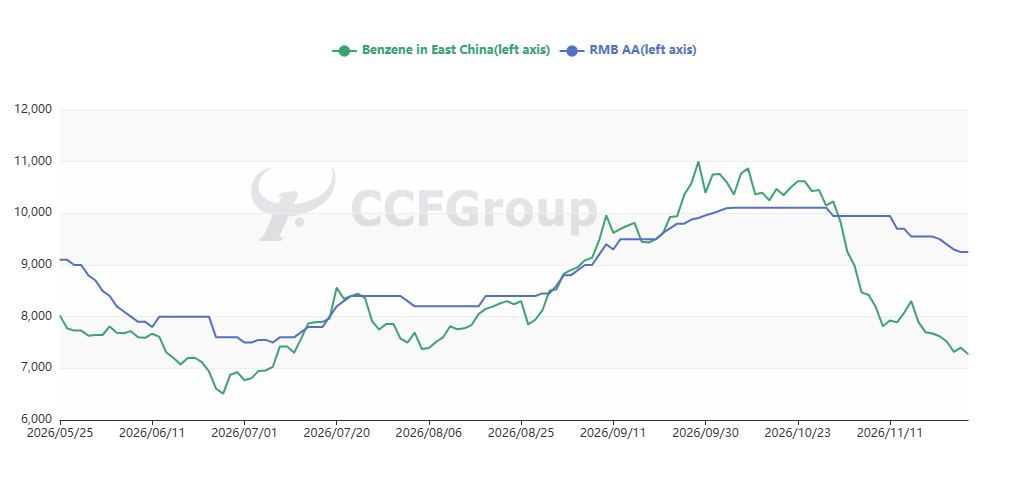
By contrast, downward pressure on PA66 was released concentratedly during this window. Owing to its inherent pricing lag, adipic acid kept softening and cost support eroded. Broad market sentiment turned pessimistic, and the market widely expected cuts to PA66 offers. After consuming high-cost raw material stocks, producers accepted lower negotiated prices to secure deals, creating a substantial gap between listed offers and actual transaction values. Demand stayed weak, with a notable downturn in the tire sector. Downstream plants operated at low operating rates and maintained lean inventories, providing limited buying support. This kept driving steep falls in PA66 chips.
On balance, PA6 tracks raw materials closely with fast price reactions and quicker risk release, and is expected to trade with mild volatility in the near term. Constrained by its dual feedstock setup and long-term contract model, PA66 exhibits lagged pricing. It resisted downside at first but is now undergoing concentrated catch-down, and this weak trend is likely to persist in the short run.