

Gasoline crack spread declines sharply |
|
| Louis | |
| Insight | Time: Nov 3 2026 3:06PM | |
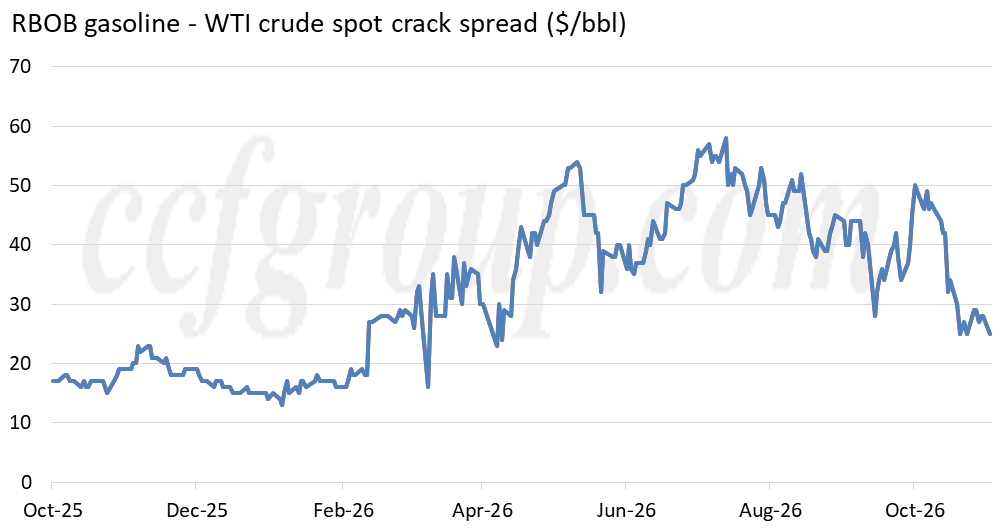
The gasoline crack spread has continued to decline from its year-to-date high of $58.47/bbl on July 13, dropping to $24.51/bbl on October 20, a maximum pullback of 58.1%. On October 29, it closed at $28.49/bbl, still 51.3% below the year-to-date high.
Supply side
Global refined product exports increased intensively, and refining margin was expected to decline.
* EIA data show that U.S. gasoline inventories rebuilt again in late October (206.0 million barrels in the week ending October 23, up about 1.6 million barrels week on week).
* Russia's November diesel export quota is 2 million tons, four times that of October, equivalent to about 500,000 barrels per day.
* China's cumulative export quota for the year is about 42 million tons (the highest since 2021), with an additional 5.7 million tons added in October.
* India's diesel exports reached 586,000 barrels per day in September, 43% above the first-half average, and rose another 19.6% month on month in October.
* South Korea will relax its November export cap to 110% of the same period last year.
* Europe will release 42 million barrels of strategic reserves over three months (about half of it diesel).
Refined product supply is expected to loosen somewhat.
Demand side
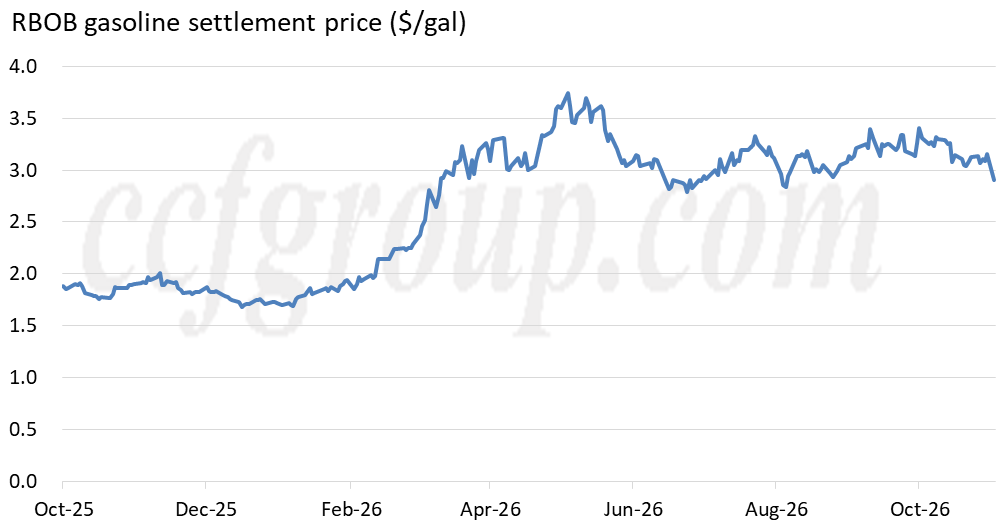
Falling end-user consumption has pushed gasoline prices down, and blending demand has weakened accordingly. With the driving season over, end-use gasoline and diesel consumption has declined seasonally, and gasoline prices have lost support, with the RBOB settlement price falling 9.2% in October.
After gasoline and diesel prices fell, blending margins narrowed, blenders' willingness to purchase blending components declined, and blending demand weakened accordingly. The softening of blending demand in turn further suppressed blending component and gasoline prices, creating negative feedback.
Crude oil side
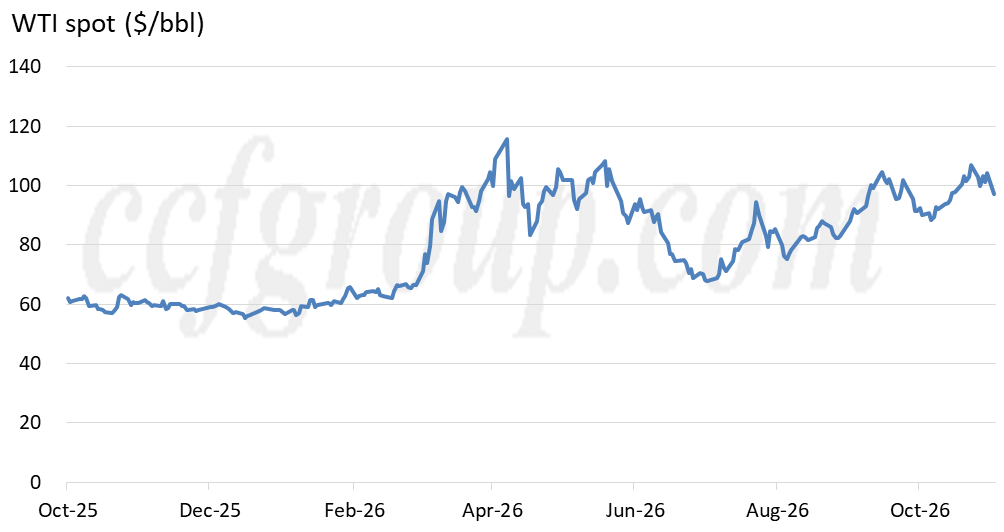
Crude remained strong. WTI spot rose from $74.51/bbl on July 13 to $101.21/bbl on October 29, a cumulative gain of 35.8%, including a 9.4% rise in October alone. Geopolitical premiums and tight crude supply-demand conditions kept oil prices running high. Gasoline moved sideways with cost support, and the crack spread was compressed by both weak gasoline and strong crude oil.
Impact analysis
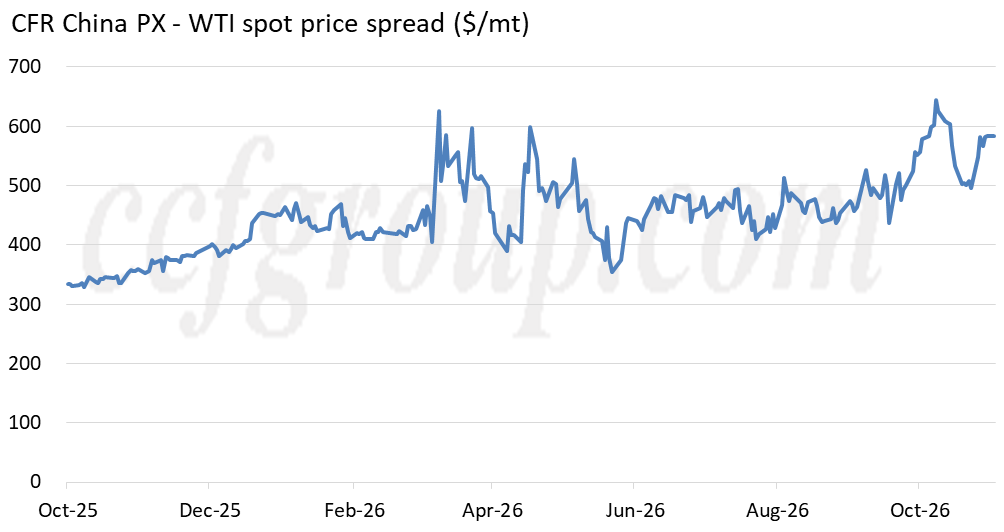
Weakening blending demand has led to the marginal shift of aromatics toward the chemical sector. As gasoline prices fall and blending margins compress, weaker blending demand means that less aromatics (toluene, mixed xylenes, etc.) are diverted into gasoline blending, and components flow more toward chemical uses.
Conclusion
The sharp plunge in the crack spread was pressured by expanded supply, which weighed on refining profit expectations, and by seasonally weaker gasoline demand, which dragged down prices and squeezed margins. Currently, the crack spread is range-bound at a relatively high level, and its future direction depends on three variables: actual export realization, the evolution of blending demand, and crude prices.