

Nylon 6: feedstock correction spurs rising downstream output cuts |
|
| Irma Zhang | |
| Insight | Time: Sep 23 2026 9:56AM | |
Key takeaways
- Amid expectations of US rate hikes, oil supply recovery and potential US-Iran diplomatic breakthroughs, crude oil and benzene have fallen from highs, softening spot prices for CPL and PA6 chips across China's nylon 6 chain.
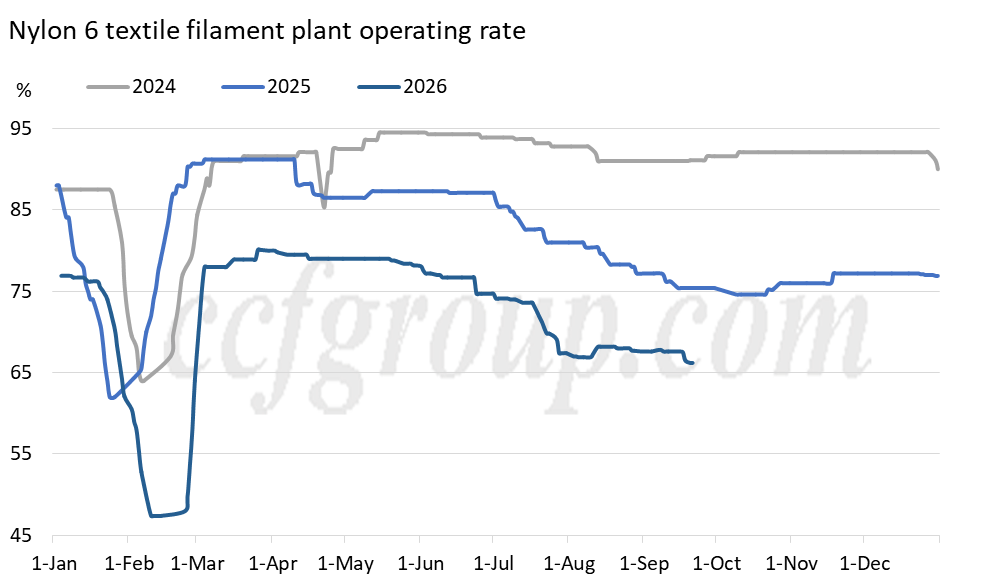
- Nylon 6 filament operating rate dropped to 66.2%, 9% lower year-on-year. More mills plan production cuts and holiday shutdowns over the Mid-Autumn and National Day break due to weak end-user orders.
- CPL processing margins get temporary support as the Lu'an unit remains offline, yet pricing stays highly sensitive to benzene movements. PA6 semi-dull chip offers show wide downside divergence amid bearish sentiment from filament producers.
- Downstream participants face dual risks: further feedstock declines versus tight benzene supply that may prop up chemical prices; producers are advised to match output and contract purchases to real-order backlogs.
Market overview
Driven by multiple macro factors including US monetary tightening, projected oil supply restoration and hopes for US-Iran diplomatic progress at the UN General Assembly, crude oil and benzene have retreated from recent highs. This feedstock pullback has triggered varied responses along China's nylon 6 industrial chain. CPL and PA6 chip spot prices have weakened, while downstream filament transactions turned quiet. Many weaving and spinning mills intend to scale back production ahead of major national holidays on poor order visibility. Though tight benzene supply sets a potential price floor, bearish market psychology dominates near-term trading activity.
CPL spot moved up from 14,300yuan/mt in mid-September to a peak offer of 14,800yuan/mt. However, amid rapid benzene declines, actual transaction prices only reached 14,420yuan/mt before falling back to 14,300yuan/mt in latest negotiations. CPL processing margins may ease under weak trading volumes. Yet margins will avoid sharp compression for now, since the Lu'an production unit has not restarted and keeps CPL fundamentals balanced. Benzene remains the key leading indicator for CPL price movements.
| Product | Unit | Highest in mid-Sep | 18-Sep | Decline rate |
| WTI crude | $/bbl | 106.75 | 95.47 | -10.6% |
| Benzene futures contract | yuan/mt | 9619 | 8751 | -9.0% |
| Benzene East China spot | yuan/mt | 9960 | 9435 | -5.3% |
| CPL RMB spot | yuan/mt | 14420 | 14300 | -0.8% |
| PA6 low-RV SD chip | yuan/mt | 15090 | 14910 | -1.2% |
Over recent days, PA6 semi-dull chip offers have shown large differences in downside adjustments. Some offers held steady or fell by 100-200yuan/mt, while selected offers dropped 400-500yuan/mt. Amid prevailing bearish sentiment among filament plants, buyers only place essential-need orders. Chip producers are facing heavy pressure on new sales in the short run.
During the previous feedstock rally, downstream weaving mills mostly consumed existing inventories with limited essential-volume purchases. Nylon 6 filament struggled to follow cost-driven price increases, and high-price deals remained scarce. Right as weavers were about to ramp up routine spot buying, falling crude and benzene amplified market fears. Due to insufficient orders and risks of building high-cost inventory, more weaving mills are scheduling shutdowns for the Mid-Autumn and National Day holidays.
Filament plants have used up their low-cost raw-material stocks. Operating with spot-sourced feedstock now generates substantial losses. Approaching the two-holiday window, stocking demand has vanished and real-order consumption has shrunk. Some filament mills keep shutting down poorly-selling product lines. The industry-wide average operating rate slipped further to 66.2%, down 9% year-on-year. Heavy shutdowns on heavy-denier lines push actual output even lower versus last-year levels.
Crude oil and benzene show no clear signs of bottoming out, and downstream players maintain bearish expectations for CPL and PA6 chips. Without solid order backlogs, keeping production running means consuming expensive spot feedstock and risking inventory build-ups. Post-holiday market direction remains uncertain, so inventory-related loss risks are considerable. For this reason, several filament mills are planning additional cuts over the holiday period. Others, expecting deep price falls in October, consider shifting to contract-based procurement to avoid exposure to volatile spot feedstock.
Even so, benzene supply stays tight. After the current crude correction, benzene still retains fundamental price support. Persistent one-sided bearish positioning therefore carries notable risks. At the same time, downstream risk-aversion and reduced purchasing will be hard to reverse quickly.
Filament producers are advised to follow market trends and control risks. They may adjust operating rates or adopt contract procurement, based on their individual order books and raw-material inventory levels.