

Nylon chain grapples with triple squeeze |
|
| Irma Zhang | |
| Insight | Time: Jul 31 2026 3:31PM | |
Key takeaways
- Thin supply-chain inventories magnify price volatility amid plant maintenance and swinging oil & benzene prices.
- Seasonal fabric demand weakness weighs on operating rates; H1 2026 nylon filament output sees its first double-digit yearly drop.
- Cash losses extend across the chain from CPL and PA6 chip to textile filament makers, due to weak cost pass-through and capacity expansion.
- The three pressures reinforce each other and slow recovery; long-term capacity elimination will likely speed up.
- A market rebound may emerge in September upon full clearance of low-cost stocks and seasonal demand recovery.
Market overview
China nylon industrial chain faces three intertwined headwinds: supply shocks, shrinking demand and widespread cash flow erosion. Thin inventory buffers magnify price swings, while slack end-user fabric consumption blocks cost pass-through. Losses have spread across upstream CPL, midstream PA6 polymerization and downstream textile filament plants. These pressures are unlikely to ease in the short term, and prolonged margin stress will speed up capacity elimination unless unexpected positive catalysts emerge.
The most notable shift in July came amid concentrated upstream maintenance against minimal inventory across the whole value chain. Luxi, Shenma, Lubao and other facilities cut runs or suspended production in July, impacting roughly 400,000 tons of capacity and dragging the CPL operating rate down to around 66%. With nearly depleted inventory buffers across upstream and downstream segments, price reactions intensified once supply tightened.
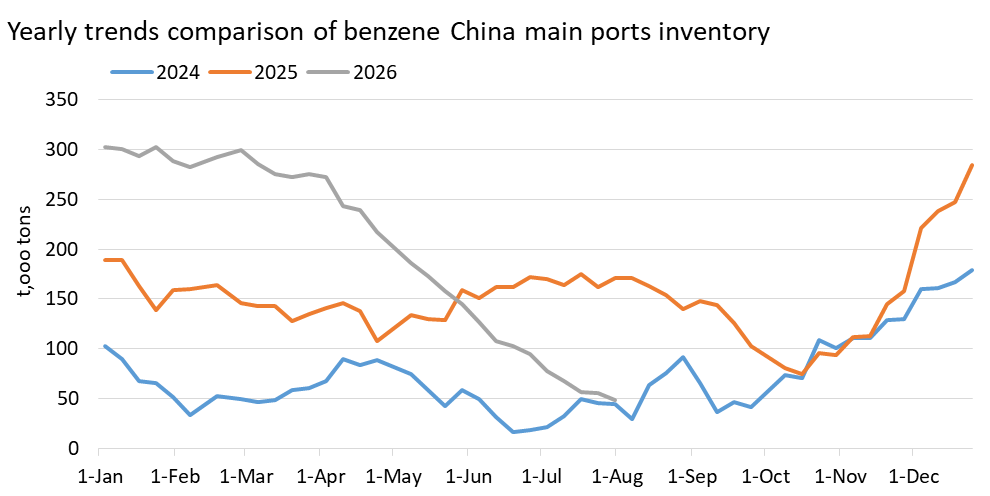
Driven by higher crude oil prices and CPL turnarounds, East China CPL spot prices surged week-on-week starting from the second week of July. Meanwhile, benzene climbed to 8,450yuan/mt amid depleted port and social inventories.
Thin stocks offer little cushion against outages, weather risks and geopolitical events, easily triggering sharp price spikes. Market sentiment can shift rapidly as well. At the start of this week, crude oil retreated, and benzene spot prices fell nearly 500yuan/mt within a single day.
Instead of stabilizing prices, low inventory has normalized extreme short-term volatility. The roller-coaster pricing environment puts participants across the nylon chain in a tough position when setting offers and substantially elevates operational risks.
Contrary to upstream producers' firm pricing stance, downstream demand continues to weaken. End-user fabric production enters the seasonal off-season, with sparse fabric orders and slow goods movement, significantly reducing risk appetite among converters. After extreme price swings in H1, buyers fear renewed oil price corrections and resist fresh purchases. The mainstream strategy remains "no orders, no procurement; avoid loss-making production", and ultra-short purchasing cycles have persisted.
Pressure transmits upward through the chain: slow fabric consumption restricts textile filament shipments, forcing HS chip sales at discounted prices. As a result, the average operating rate of nylon filament mills fell from 73.5% at the month start to 67.4%, hitting multi-year lows for this time of year.
CCFGROUP data shows China domestic nylon filament output declined roughly 11% year-on-year in H1 2026, marking the first double-digit drop on record. The decrease stems from lower plant operating rates and a shift toward finer denier products, which directly weighs on total output volumes.
Cash flow pressure represents the most severe challenge, as losses spread across the full chain covering CPL, PA6 chip and textile filament production.
CPL processing margins recovered slightly in July compared with June, supported by maintenance-driven tight supply and low inventories. However, the improvement relies on fragile fundamentals. Sharp rallies in benzene and persistently high sulfur prices squeeze margins. Although CPL sellers hold stronger negotiating power, the current market creates a lose-lose situation for both upstream and downstream players.
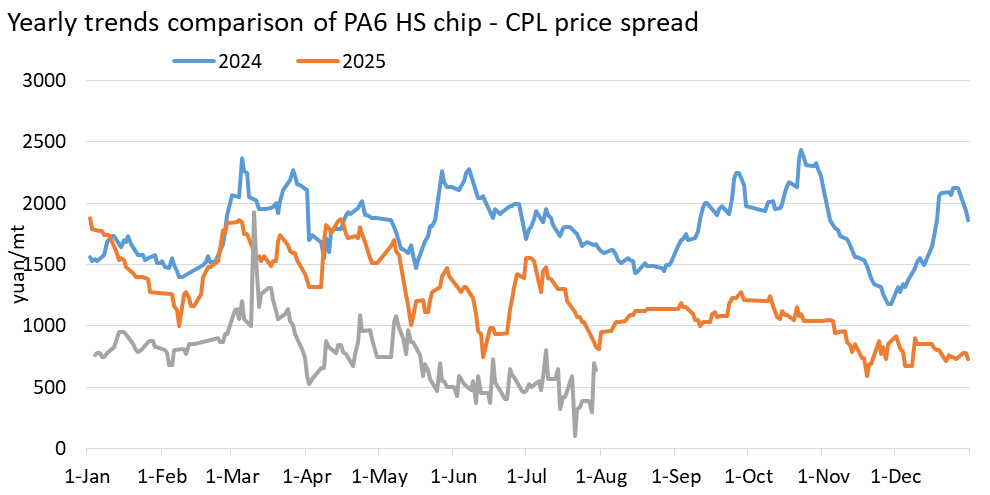
The polymerization segment faces harsher conditions, with processing margins stuck in negative territory. PA6 HS chip producers engage in fierce competition amid muted demand. Excluding the pandemic period, many mainstream plants are running at the lowest operating rates since commissioning.
Textile filament manufacturers also bear heavy pressure, with cash flow hitting historic lows. Weak demand and concentrated new capacity launches over the past two years are the primary drags.
These three pressures reinforce one another and constrain sector recovery. Without strong policy support or unexpected positive catalysts, the industry will require a long period to emerge from the downturn.
In the short term, market participants should monitor the depletion of low-cost raw material inventories. If low-priced stocks are fully consumed, and processing margins cannot contract further, a smoother market recovery may arrive alongside seasonal demand improvement in September. In the long run, sustained triple pressures will accelerate the pace of inefficient capacity elimination.