Performance of 6 listed polyester companies in H1 2026 |
|
| Tina Kong | |
| Insight | Time: Jul 20 2026 2:34PM | |
Following Rongsheng Petrochemical's earnings announcement on the evening of July 14, 2026, all six listed polyester companies released their H1 performance forecasts. Q2 net profit ranges and quarter-on-quarter changes are calculated based on disclosed H1 guidance and confirmed Q1 attributable net profit, as shown below:
| Company | Net profit attributable to parent in Q1 2026 | Forecast of net profit attributable to parent in H1 2026 | Calculated net profit for Q2 | Q2 QOQ Change |
| Rongsheng | 2.815 | 5~5.2 | 2.185~2.385 | -22.38%~-15.28% |
| Hengli | 3.91 | 7.2 (Central value) | 3.29 | -15.86% |
| Hengyi | 1.995 | 5.5~6 | 3.505~4.005 | +76%~101% |
| Shenghong | 1.432 | 4.2~5 | 2.768~3.568 | +93%~149% |
| Tongkun | 1.898 | 4.1~4.5 | 2.202~2.602 | +16%~37% |
| Xinfengming | 0.368 | 1.38~1.5 | 1.012~1.132 | +175%~208% |
Unit: Bln Yuan
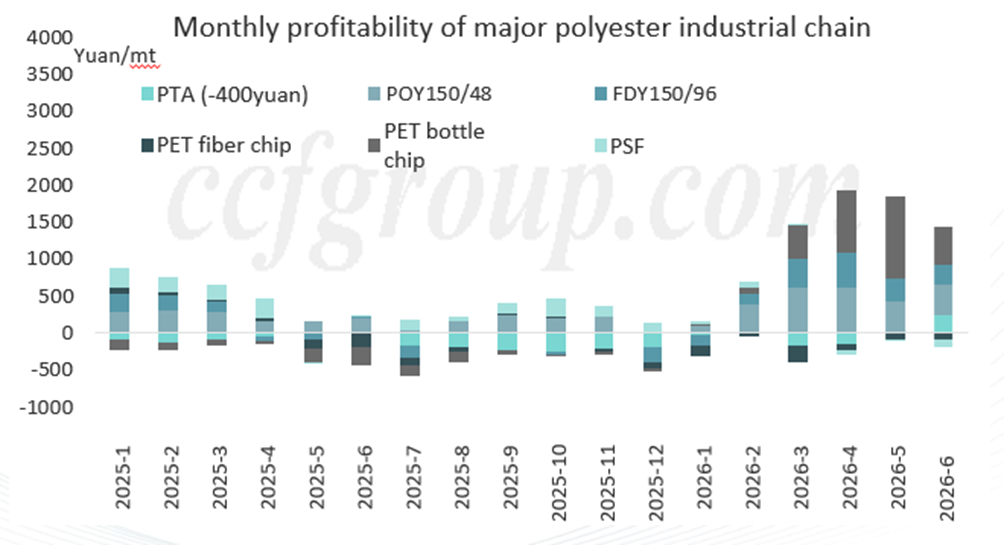
Breakdown of polyester upstream-downstream performance and profitability in listed companies:
The polyester chain split into two distinct market phases in the first half of 2026, creating divergent Q1/Q2 profit performance among listed firms: some recorded stronger Q1 earnings, while others outperformed in Q2.
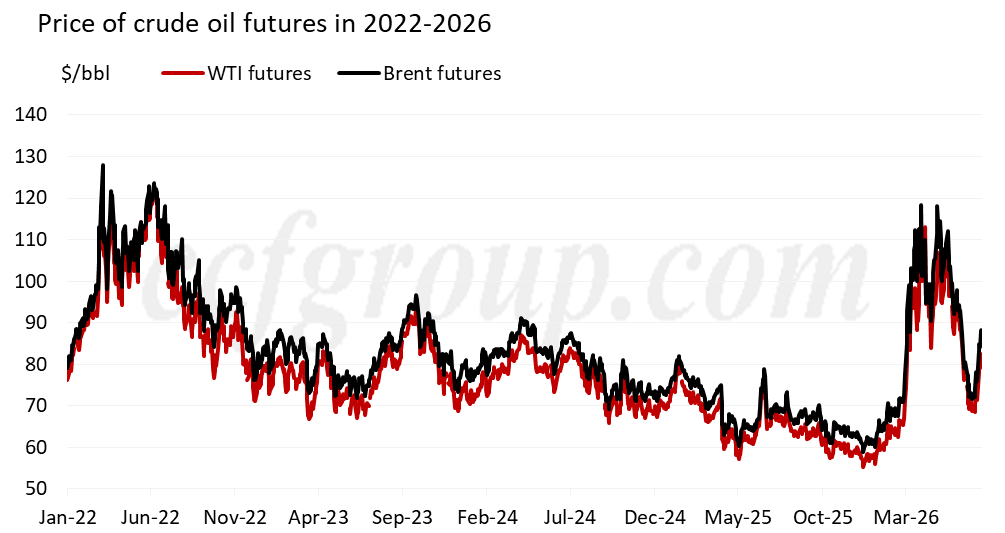
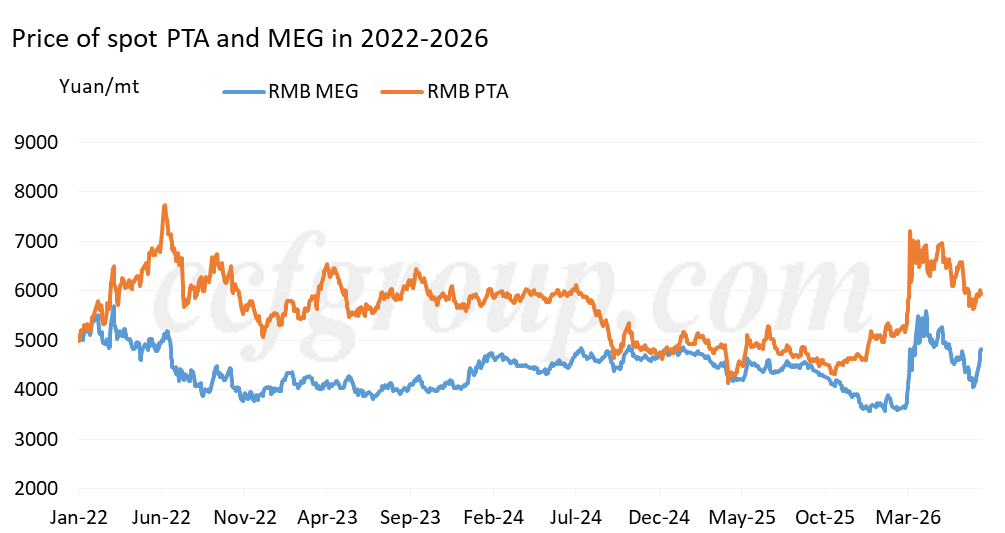
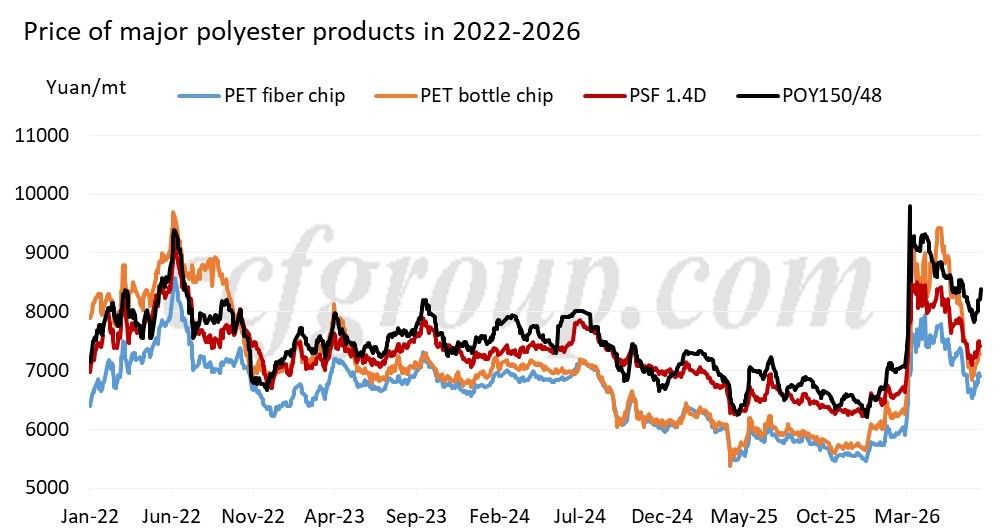
Geopolitical tensions lifted crude oil prices to peaks, pushing refining margins to multi-period highs. Downstream polyester mills saw partial cash flow improvements but faced pressure on raw material procurement volumes. Upstream refining segments covering refined oil, naphtha, aromatics and coal-based MEG delivered robust profits, while PTA, PFY and PSF yields lagged behind upstream refining.
Middle East tensions gradually eased, and the signing of memorandums in June accelerated the fade of geopolitical risk premiums on crude oil, dragging prices down across the entire polyester chain. Downstream players curbed inventory pressure via low operating rate, resulting in milder price declines than upstream segments. Instant cash flow profitability for downstream products (PTA, PFY, PET fiber chip and PET bottle chip) improved versus Q1. Upstream refining cracked margins narrowed, with domestic refinery production cuts further inflating operating costs.
Refinery supply was disrupted by strait-related crude shipment risks in Q1. While Korean, Japanese and some domestic refineries reduced run rate, refineries affiliated with listed polyester firms (Hengyi Brunei, Shenghong Refining, Hengli Refining, Zhejiang Petrochemical) held crude reserves and maintained high utilization above 90%. Q2 saw diverging operating rate across the four integrated refineries: Hengli Refining and Zhejiang Petrochemical cut output for respective operational reasons, while Hengyi Brunei and Shenghong Refining kept higher run rate. Shenghong Refining launched a full 45-day overhaul starting June 28, shutting down atmospheric-vacuum distillation, PX and ethylene units entirely, leading to a sharp rate drop in late-June.
As a result, integrated refinery players Rongsheng and Hengli posted stronger Q1 profits, with Q2 polyester margin gains insufficient to offset shrinking refining earnings. In contrast, Hengyi and Shenghong maintained solid profitability in Q2.
Tongkun and Xinfengming, whose core businesses center on downstream PTA and polyester products, recorded higher per-ton nominal profits for PTA, PFY and PET fiber chip in Q2, driving quarter-on-quarter earnings growth.
Performance of listed polyester companies
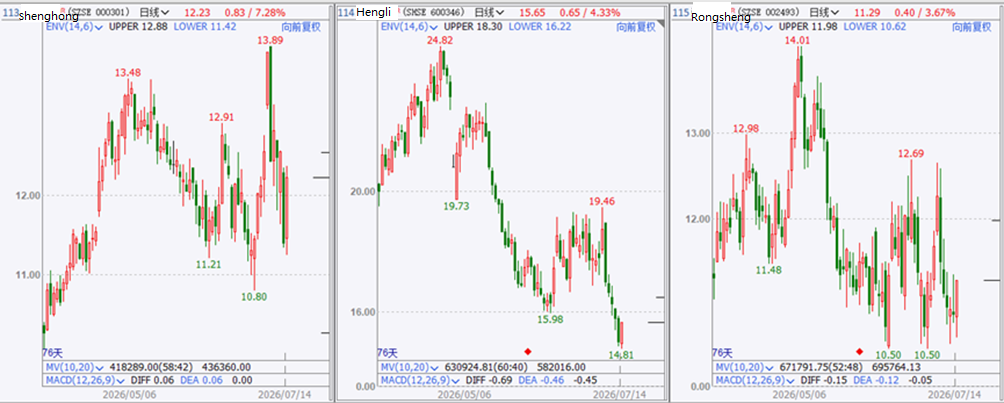
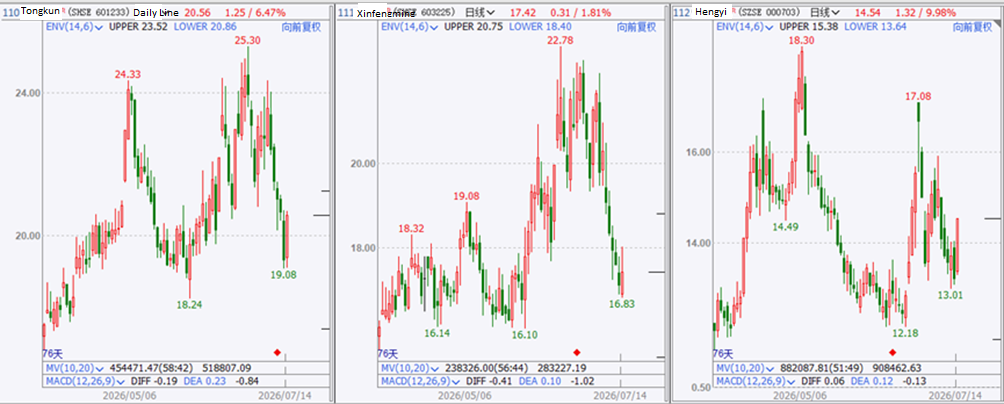
Refinery supply was disrupted by strait-related crude shipment risks in Q1. While Korean, Japanese and some domestic refineries reduced run rate, refineries affiliated with listed polyester firms (Hengyi Brunei, Shenghong Refining, Hengli Refining, Zhejiang Petrochemical) held crude reserves and maintained high utilization above 90%. Q2 saw diverging operating rate across the four integrated refineries: Hengli Refining and Zhejiang Petrochemical cut output for respective operational reasons, while Hengyi Brunei and Shenghong Refining kept higher run rate. Shenghong Refining launched a full 45-day overhaul starting June 28, shutting down atmospheric-vacuum distillation, PX and ethylene units entirely, leading to a sharp rate drop in late-June.
As a result, integrated refinery players Rongsheng and Hengli posted stronger Q1 profits, with Q2 polyester margin gains insufficient to offset shrinking refining earnings. In contrast, Hengyi and Shenghong maintained solid profitability in Q2.
Tongkun and Xinfengming, whose core businesses center on downstream PTA and polyester products, recorded higher per-ton nominal profits for PTA, PFY and PET fiber chip in Q2, driving quarter-on-quarter earnings growth.
Shenghong Refining's overhaul will continue through mid-August, sustaining inventory destocking for PX and PTA in July-August. Key follow-up variables include potential run rate hikes at Hengli and Zhejiang Petrochemical as Middle Eastern crude cargoes arrive, which will restore PTA supply. The pace of polyester polymerization rate recovery will hinge on end demand and manufacturers' profit-first strategies, reshaping raw material supply balances. As downstream demand kicks in later in the year, polyester products are likely to exhibit greater profit elasticity than upstream segments amid ongoing profit competition across the industrial chain.